Dog walking app - what a phone really changes in life with a dog
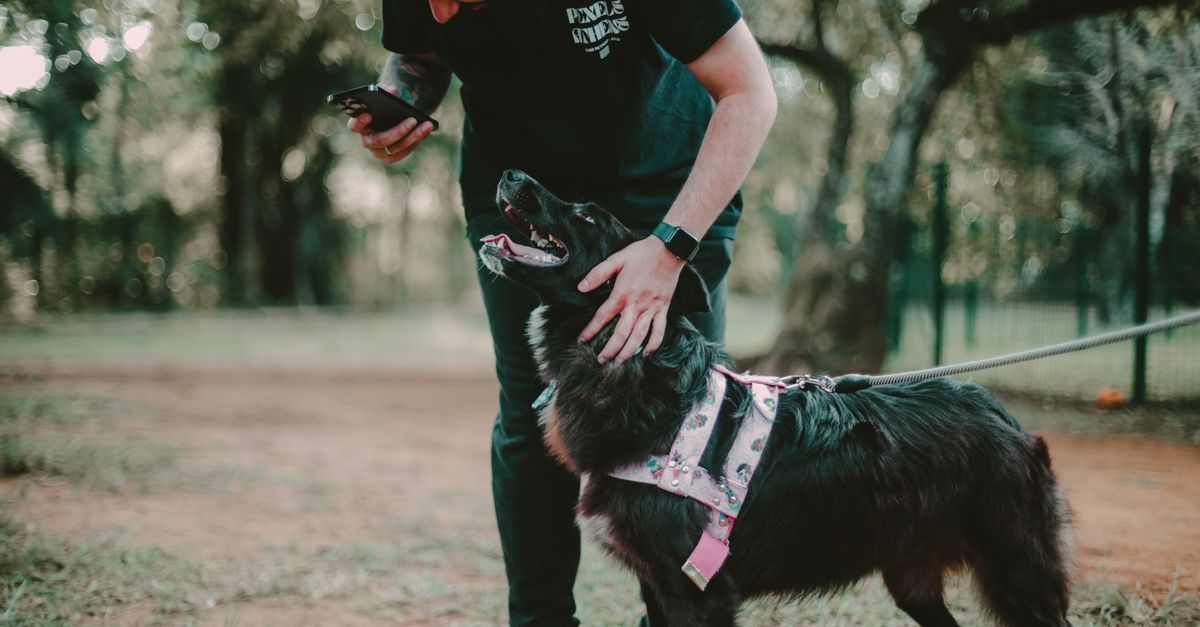
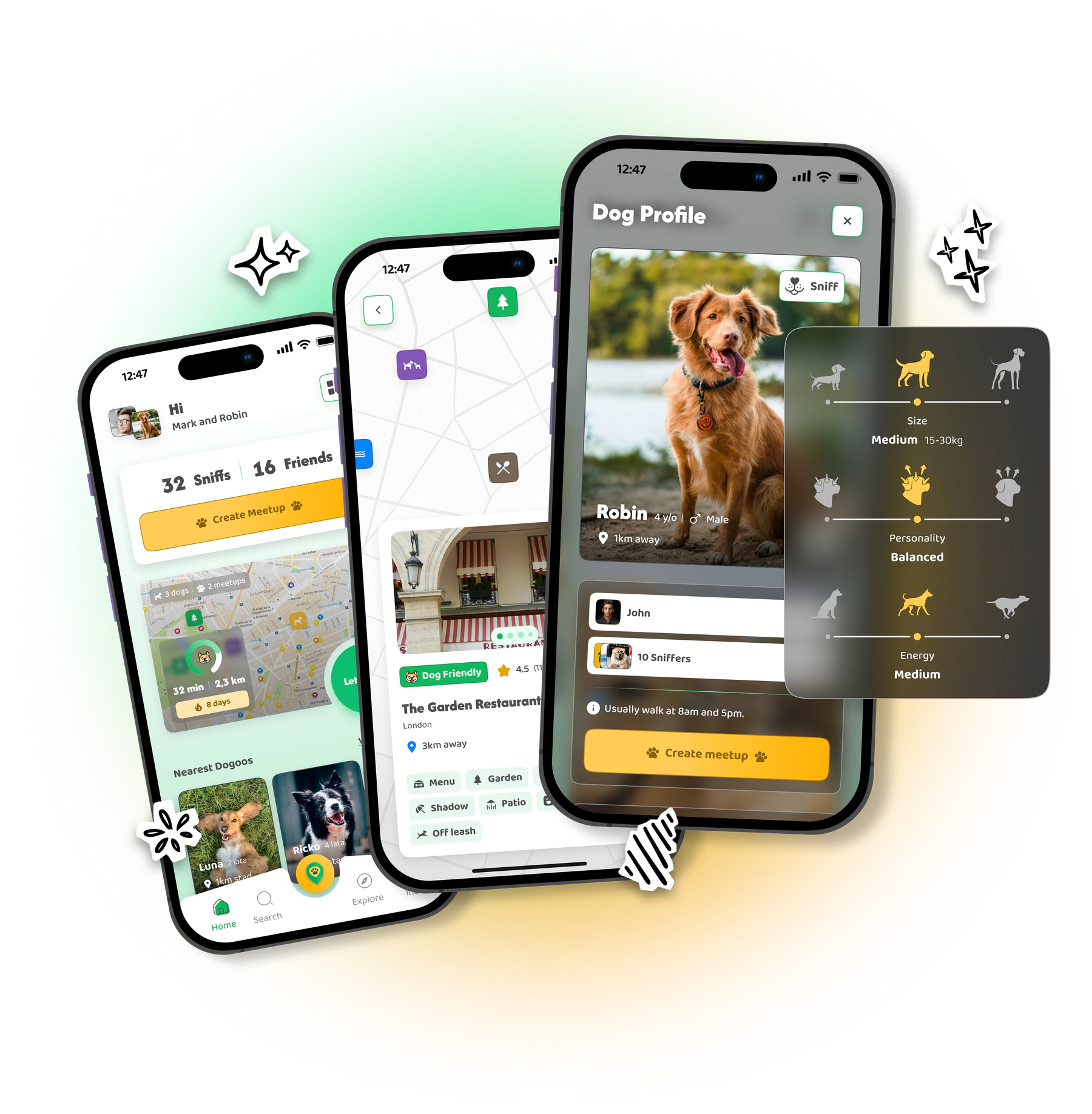
A good dog app does four things: it shows a map of places where dogs are genuinely welcome, it lets you arrange a walk with someone nearby, it records your route and walking time so you can see how much exercise your dog actually gets, and it suggests new routes instead of the same loop around the block. The biggest value, though, is not a feature - it is the people on the other side: a local community of owners who warn, advise and head out together.
Your phone will not walk the dog for you. What it can do is tell you where to go, with whom and how often - instead of another lap around the block at 10pm. That is the whole difference between an app that eats your time and one that pushes you out the door.
What is a dog app actually for?
To stop guessing. Life with a dog is full of questions whose answers float around groups, forums and the memory of your neighbours:
- Where can you actually walk in with a dog, and where will you be turned away?
- Who can you go out with, so your dog gets company and you get a conversation?
- How much exercise does your dog really get in a week?
- What should you avoid nearby - poison bait, contaminated water, a busy road?
- Who do you ask when you need an answer fast, specific and local?
An app is worth exactly as much as the shortcut it gives you to those answers.
A map of places, or the end of guessing
The biggest gap in life with a dog is information. The beach where dogs are legal in season. The cafe that genuinely does not mind. The trail you can actually walk with a dog instead of hauling them up a ladder. Printed lists age within months, and rules change from season to season.
So the thing that matters about a map is not the number of pins - it is that the pins are added and corrected by people who were just there. A photo from last week says more than an entry from 2019. We do the same job in long form: see where to go with your dog or the guide to dog-friendly beaches. An article gives you direction, the map in your pocket gives you what is true today.
Shared walks and socialization without forcing it
Arranging a walk together is oddly hard work. You have to find someone, message them, agree a time and a place - and by the third message the enthusiasm is gone. An app cuts that down to one tap: someone posts a walk, you join, you sort out the rest on the spot.
For your dog that is a concrete benefit, not a social nicety. Regular contact with other dogs on neutral ground teaches them to read signals and burns energy in a way plain marching never will - more on that in our piece on dog socialization. One condition: match the company to the dog you have, not the dog you would like to have. If your dog is fearful or reacts with aggression, start with a behaviorist, not a group outing.
Routes, time and walk history
Route and time tracking sounds like a runner's gadget. In practice it is the simplest mirror you can put in front of yourself. After a week you see in plain numbers that your "daily long walk" is really three 12-minute laps plus one proper outing on Saturday.
This is not about collecting kilometres. It is about catching the week where your dog got too little, and making up for it in the next one. How much is enough is something we break down in how many walks a dog needs. The history is practical, too: you find that one route your dog loved and go back to it without reconstructing it from memory.
New routes instead of the same loop
A dog reads the world with their nose, and the same route is a newspaper they have already read. An app that shows other owners' trails sorted by terrain - forest, water, mountains, city - solves the most common problem with walks: routine. Instead of inventing something, you borrow a good route and test it yourself. More ideas for changing the quality of a walk are in how to make dog walks better.
Warnings and local safety
The least glamorous feature, and one of the most important. Poison bait in the park, broken glass on the path, contaminated water, a spike in tick activity - a note from someone who was there an hour ago beats any guide. Map warnings only work if you add them too. For seasonal protection, see our article on ticks on dogs.
In the end it is about people
Features can be copied. The neighbour who tells you there have been boars in that patch of forest for a month cannot. The real value of a dog app starts the moment there is someone from your street on the other side of the screen: a vet open on Sunday, a warning about a spot, an offer to walk on Thursday at 6pm. That is when the phone stops being another screen and becomes a shortcut to people.
What to look for in a dog app
| What to look for | Why it matters |
|---|---|
| A map of places added by users | Current reality, not a list from three years ago |
| One-tap shared walks and meet-ups | Your dog gets company, you do not organise an expedition |
| Route and time tracking | You see the real dose of exercise, not your idea of it |
| Trails sorted by terrain and difficulty | An end to the same loop around the block |
| Hazard warnings | Your dog's safety in your own neighbourhood |
| Visibility and privacy settings | You decide who sees your walk |
| A living local community | Answers from people who were actually there |
Most dog apps cover one or two rows of that table: one counts kilometres, another collects places, a third teaches commands. Those are useful tools and there is no point pretending otherwise. We build DOGOUT so that these pieces work together and stay pointed at what actually changes a dog's life: getting out, and people. There is more about the app itself on dogout.app, though the fastest way to judge it is to install it and see who is walking near you today.
What no app will do for you
It will not diagnose anything - that is your vet's job. It will not fix separation anxiety or reactivity - that is a behaviorist's job. It will not get your dog out of the house on its own. What an app does is shorten the distance between "I should" and "I am going out": it hands you a place, company and an excuse. The rest is down to your legs.
Go twenty minutes further than usual today. Check the map for what is around that corner you never take, and see who nearby is out right now. Your dog does not need a perfect plan. They need to get out.
Frequently asked questions
- What is the best app for dog owners?
- The best one gets you out of the house instead of holding you at the screen. Check four things: does it have a living map of dog-friendly spots in your area, can you arrange a shared walk through it, does it record your route and walking time, and are there real people behind it rather than just a database. We built DOGOUT around exactly those four points.
- Are dog walking apps free?
- DOGOUT is free to download and the core features - map, walks and community - work right after install. With any other app, check before you download whether the features you actually need sit behind a subscription.
- Does a dog app track walking time and distance?
- Yes, an app with walk tracking records your route on the map along with the time you spent out, and builds a history from it. It is the simplest way to see how much movement your dog really gets in a week, instead of guessing from memory.
- Can an app help with dog socialization?
- It helps with the logistics: you find owners nearby, arrange a walk on neutral ground and match company to your dog's size or energy. The socialization itself happens on the walk, not in the app - and if your dog is fearful or reactive, start with a behaviorist rather than a group meet-up.
- Can other people see my location?
- In DOGOUT you set the visibility yourself - a walk or a meet-up can be public, visible to friends only, or fully private. Before you use any map-based app, go through its privacy settings first.
- Do I need an account to browse the map?
- In DOGOUT you can start as a guest and look around the map. An account and a dog profile unlock the rest: joining walks, adding places and messaging other owners.