How Much Do Dogs Sleep? Hours by Age
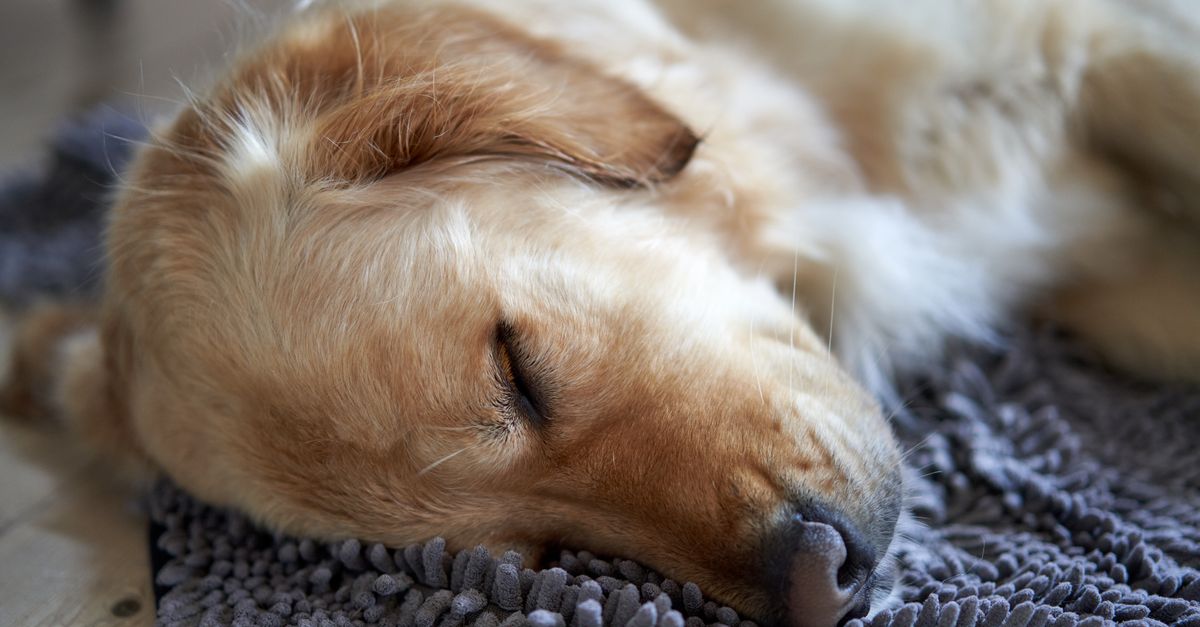
Adult dogs sleep around 12-14 hours a day, counting overnight sleep plus daytime naps. Puppies and senior dogs need far more - up to 18-20 hours. How much a dog sleeps depends on age, breed, activity level and health. A sudden, big change in how much your dog sleeps is a reason to call your vet.
Your dog sleeps away half its life, and that's completely normal. Dogs sleep far more than we do, and they do it differently - in shorter cycles, with light sleep that lets them snap awake in a second. Before you start worrying that your dog sleeps too much (or too little), it helps to know what normal actually looks like.
How many hours a day do dogs sleep?
A healthy adult dog sleeps an average of 12-14 hours a day. That's overnight sleep plus daytime naps combined - most dogs get 6-8 hours overnight alongside you, then top up with short naps through the day.
The key word is "average". A dog isn't a machine with one fixed setting - how much it sleeps depends on age, breed, size, activity level and health. A small, wired terrier and a mellow Saint Bernard will sleep very differently, and both can be perfectly healthy.
How much do dogs sleep by age?
Age is the biggest factor. The younger or older the dog, the more sleep it needs. Here are the rough ranges:
| Life stage | Rough sleep per day | Why it's that much |
|---|---|---|
| Puppy (up to ~6 months) | 18-20 h | Building bones, muscle, brain and immune system fast |
| Young dog (~6-12 months) | 15-18 h | Still growing and processing a flood of new input |
| Adult dog (~1-7 years) | 12-14 h | Settled rhythm: overnight plus daytime naps |
| Senior dog (~7-8 years+) | 16-18 h | Lower energy, slower recovery |
The ranges overlap, and that's fine. Your dog might sit at the low or the high end of its stage - what matters is its own steady rhythm, not hitting an exact number.
The puppy who falls asleep mid-play
Puppies run on two modes: full power, or sudden shutdown. They'll fall asleep literally mid-game. That's normal - sleep builds their growing body and locks in everything they learn each day. Don't wake a sleeping puppy without good reason, and give it a calm place to crash. We cover those first weeks in our guide to walking a puppy.
The senior who slows down
For an older dog, longer sleep is a natural part of ageing. Energy drops, the body recovers more slowly, naps stretch out. Just learn to tell healthy slowing-down from apathy - if a senior not only sleeps more but also loses interest in its surroundings, goes off its food, or struggles to get up, that's a reason for a vet visit.
What else affects how much a dog sleeps?
Age isn't the whole story. Several other factors move the needle:
- Breed and size - large and giant breeds (Saint Bernard, Newfoundland, mastiff) tend to sleep more. Dogs bred to work, like German Shepherds and Border Collies, are often more switched-on and, given enough to do, sleep less.
- Activity level - a dog with plenty of exercise and stimulation sleeps deeper, more restorative sleep. A dog that lies around all day, oddly enough, often naps more out of boredom.
- Health - illness, pain, an underactive thyroid or being overweight can all push sleepiness up noticeably.
- Environment and routine - a calm home, consistent feeding and walk times and a comfortable bed all support good sleep. Noise, stress and chaos wreck it.
If your dog seems to lie around and mope too often, the problem usually isn't too much sleep - it's too little exercise and stimulation. That's exactly how you end up with a hyperactive dog - under-walked and under-stimulated, napping the day away then bouncing off the walls at night.
Can a dog sleep too much or too little?
The raw hour count matters less than you'd think. A healthy senior sleeping 17 hours is nothing strange, and an adult dog that naps for 14 hours after a big day of exercise is well within normal.
What matters more is change against what's normal for your dog. You know its rhythm best - and it's a sudden break from that rhythm that's the real signal.
Call your vet if you notice:
- a sudden, clear rise or drop in how much it sleeps, with no obvious cause,
- lethargy, being hard to rouse, or disorientation on waking,
- restless sleep, frequent waking, or whining,
- sleepiness alongside other signs: loss of appetite, vomiting, limping, or a change in behaviour.
This isn't a list to diagnose at home - it's a list of reasons to book a visit. Sleep is one of the first places you'll notice that something is off.
How to help your dog sleep well
A few simple things make a real difference:
- Give your dog a proper dose of exercise - a dog that's tired in body and mind sleeps better. Check how many walks a dog actually needs.
- Keep a routine - consistent walk, feeding and rest times order your dog's day.
- Sort out a quiet, comfortable bed - a spot of its own, away from draughts and foot traffic.
- Add mental stimulation - sniffing games and snuffle mats tire a dog's brain the way a walk tires its body.
A dog with enough to fill its day sleeps more soundly at night - and is simply happier for it.
The best dog sleep starts with a good day. Open the DogOut map, find a new route or set up a walk with someone nearby - a tired, fulfilled dog will go down at night like a stone.
Frequently asked questions
- How many hours a day does an adult dog sleep?
- A healthy adult dog sleeps an average of around 12-14 hours a day, including overnight sleep and daytime naps. That's roughly half the day. The exact figure depends on breed, size and activity level.
- How much do puppies sleep?
- Puppies sleep far more than adult dogs - up to 18-20 hours a day. All that sleep fuels the growth of bones, muscles, the brain and the immune system, so a sleeping puppy should be left to rest whenever possible.
- Do senior dogs sleep more?
- Yes. Senior dogs usually sleep more than adults in their prime - often around 16-18 hours a day. As dogs age their energy drops and their bodies need more time to recover.
- Do big dogs sleep more than small dogs?
- Usually yes. Large and giant breeds such as Saint Bernards and Newfoundlands tend to sleep longer than small dogs. It's a general trend - the individual dog and its activity level matter more than size alone.
- When should my dog's sleep worry me?
- Worry about a sudden, clear change - your dog suddenly sleeping much more or much less than usual, seeming groggy or disoriented on waking, being hard to rouse, or sleeping restlessly. Those shifts can signal a health problem and are a reason to see your vet.
- Why does my dog sleep all day while I'm at work?
- Often it's simply boredom. With nothing better to do, a dog will nap the day away. More exercise, sniffing and play during the day usually means a more active, more contented dog.