How Often to Walk a Dog? A Practical Plan for Every Day

Walk an adult dog at least 3 times a day - morning, midday, and evening - so it has regular bathroom access and some daily movement. Puppies need to go out every 2-4 hours, and senior dogs do best with frequent but shorter walks. If your schedule can't keep that rhythm, the fix is a trusted dog walker during the day, not fewer walks overall.
The question "how often to walk a dog" comes up for every owner - especially once the daily schedule gets tight and the dog is waiting by the door with the same look as always. There's no single number that fits every dog, but you can turn it into a concrete plan that works whether you have a puppy, a senior, or a dog in its prime.
How often to walk a dog - the baseline for an adult dog
For a healthy adult dog, the general rule is at least 3 walks a day - one in the morning after waking up, one midday, and one in the evening before bed. That's the floor that lets a dog relieve itself regularly instead of holding it for most of the day. Active breeds - border collies, huskies, pointers - usually need 4-5 outings, including at least one longer, higher-intensity walk. For a deeper look at how much exercise your specific dog actually needs by breed, see our guide on how many walks a dog needs.
It's worth separating two different things: how many times you go out, and how long each walk lasts. You can take a dog out four times a day for ten minutes each and still fall short on exercise - or go out once for two hours and neglect the regularity its digestive system needs.
A daily plan by life stage
Walking needs shift as a dog ages. Here's a practical reference point:
| Life stage | Walk frequency | Notes |
|---|---|---|
| Puppy, 2-4 months | every 2-3 hours, plus after meals and naps | small bladder, no bladder control yet |
| Puppy, 4-6 months | every 3-4 hours | gradually stretch the gaps between outings |
| Adult dog | at least 3 times a day | morning, midday, evening |
| Active breed | 4-5 times a day | one longer, higher-energy walk |
| Senior dog | 3-4 times a day | shorter routes, slower pace |
For more on the first weeks with a young puppy at home, including a bathroom-break schedule, check our guide on walking a puppy.
What if your schedule doesn't allow regular walks?
This is the most common question from owners working in an office, on shifts, or traveling for work. Walking a dog too infrequently isn't just a comfort issue - it's a real health concern (urinary tract infections, bloat risk in some breeds) and a behavioral one (frustration, destructive chewing, barking).
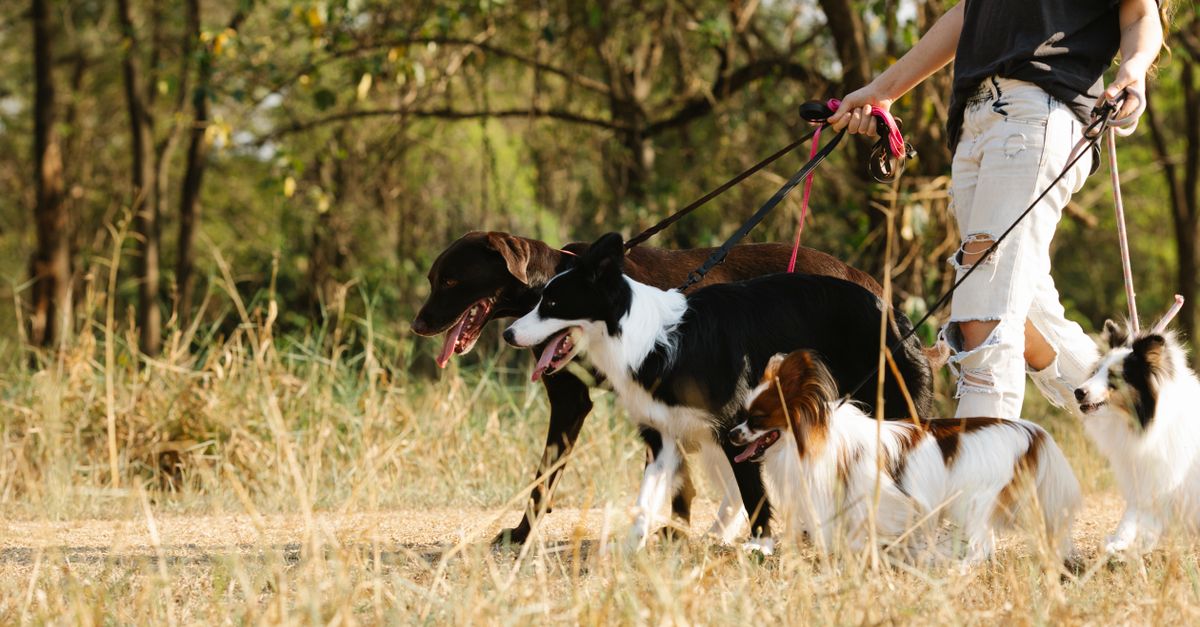
If your schedule genuinely can't support a 3-walks-a-day rhythm, a sensible fix is hiring a dog walker for the middle of the day - a neighbor, a friend, or someone who does it professionally. In most cities today, dog walking has become a real service market, with people doing it full-time or as a side gig. Before trusting anyone with your dog, check that they've handled dogs with a similar temperament to yours and know how to spot when a dog is stressed or overheating.
If you're the one looking for flexible, dog-related work, dog walking is one of the easiest ways into the field, as long as you're patient and understand basic canine behavior. Most walkers start with one or two dogs from the neighborhood and build a reputation through referrals.
Signs your dog isn't being walked enough
- Indoor accidents despite being previously house-trained
- Excessive barking or whining at the door
- Chewed furniture, shoes, or cables
- Sudden bursts of pent-up energy right after a walk
- Visible frustration and trouble settling down
If you recognize any of these in your dog, it's rarely a matter of temperament - it's usually too few outings relative to what that dog actually needs.
Vary the walk, not just the frequency
Sometimes the better fix isn't another walk - it's a different route or a different kind of walk: a sniff-focused outing, a new neighborhood, meeting another dog. A dog that takes the same loop around the block every day gets bored faster than one that regularly discovers something new. Get more ideas in our guide on making dog walks better.
Instead of counting another lap around the same patch of grass, check the DOGOUT map for the spots and routes other owners nearby have already marked - and see who else is heading out for a walk around the same time as you. Sometimes the best fix for both a busy schedule and a boring routine is teaming up with someone from your neighborhood who's walking their dog anyway.
Frequently asked questions
- How many times a day should you walk a dog?
- An adult dog needs at least 3 walks a day - morning, midday, and evening. That's the baseline for regular bathroom breaks. Active breeds and puppies need more, often 4-6 outings a day.
- How often should you take a puppy out?
- A puppy aged 2-4 months should go outside roughly every 2-3 hours, plus right after meals, naps, and play sessions. A puppy's bladder is small, so waiting too long leads to accidents indoors - which are never a reason to scold the puppy.
- Is one long walk a day enough for a dog?
- No. One long walk doesn't replace several shorter outings - a dog needs regular chances to relieve itself, not just a single burst of exercise. Spreading movement across 3-4 walks works better than cramming it into one two-hour trip.
- How much does hiring a dog walker cost?
- Prices vary by city and walk length - in most mid-size and large cities, a single walk costs roughly what a short rideshare trip would, and a monthly package for daily walks usually works out cheaper per visit. Always ask about experience, references, and their plan for handling an emergency.
- How do I find a trustworthy dog walker?
- The safest route is a recommendation from other dog owners nearby - a neighbor, someone from the local dog community, or a walker with visible references - rather than a random listing with no track record. Check that they've handled a dog with your dog's temperament and energy level before.
- Do senior dogs need as many walks as younger dogs?
- Yes, the number of walks usually stays similar - what changes is length and pace. A senior dog should still go out 3-4 times a day, just on shorter, gentler routes suited to its joints and stamina.