Loose-Leash Walking - How to Teach Your Dog to Stop Pulling
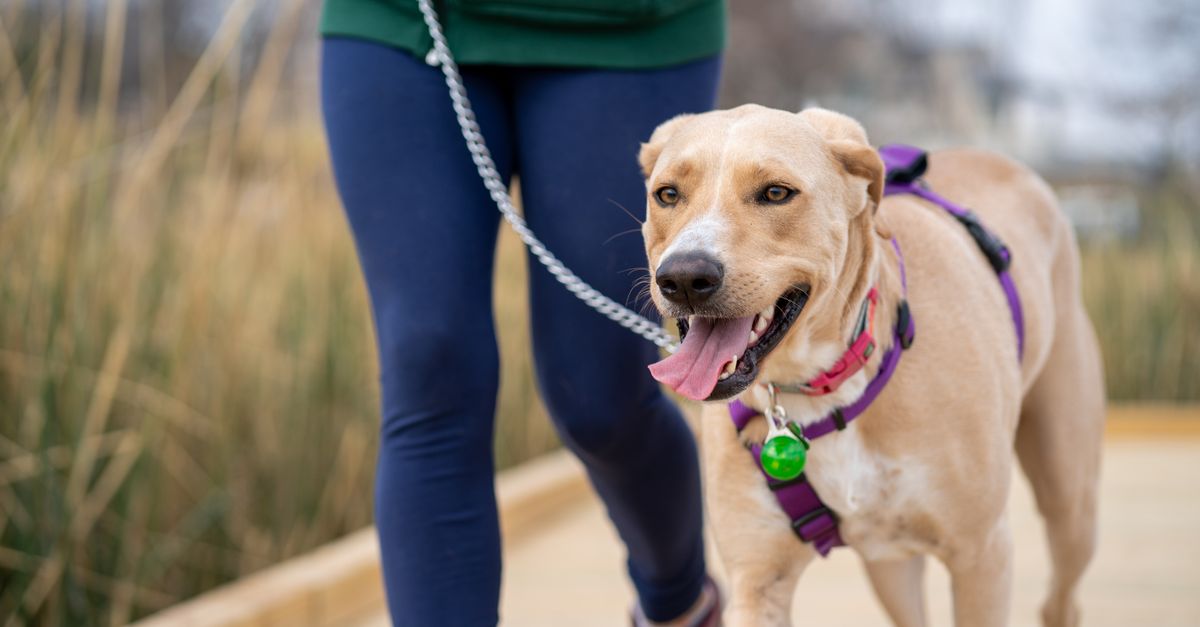
Dogs pull because it works - they get to where they want faster. To change that, stop every time the leash tightens and move again only when it goes slack. Reward your dog for walking at your side. The method demands patience and consistency, but it works on any dog.
Walking a dog that pulls like a freight train isn't fun - for you or for the dog. A tight leash means stress, poor communication, and a real risk of neck injury over time. The good news: pulling is one of the most common problems and one of the best-documented to fix. You don't need special equipment or force. You need the right method and consistency.
Why do dogs pull?
Dogs pull because pulling works. When your dog surges ahead, it reaches the interesting smell, the other dog, the patch of grass - and you follow. You're unknowingly rewarding every single pull. To change it, you need to reverse the logic: pulling pauses movement, a slack leash allows it.
This is worth remembering when you start walking a puppy - a pulling habit that becomes established early is much harder to unpick later.
Equipment - what helps, what to avoid
The right gear won't replace training, but it can make the process safer and easier:
| Equipment | When it helps | Notes |
|---|---|---|
| Flat collar | Dogs that pull lightly | Neck injury risk with strong pullers |
| Front-clip harness | Strong pullers | Reduces pulling mechanically, no pain |
| Back-clip harness | Any dog | Safe, doesn't self-correct pulling |
| Fixed-length lead (1.5-2 m) | Training | Essential - retractable leads prevent learning |
| Retractable (flexi) lead | Not during training | Automatically rewards pulling |
| Prong collar / choke chain | Never | Cause pain, teach nothing lasting |
How to teach loose-leash walking - step by step
Step 1. Start somewhere calm
Run your first sessions where there's little going on: a quiet side street, a large yard, a park early in the morning. A dog flooded with stimulation cannot focus.
Step 2. Stop every time the leash tightens
This is the heart of the method. The moment the leash goes taut - you stop. Completely. Don't pull the dog back, don't jerk, don't say anything. You stand still. The dog usually glances back and steps slightly towards you. When the leash goes slack - you move again.
Repeat this consistently through every walk. At first you'll stop every few steps. That's normal - the dog is learning a new rule.
Step 3. Reward walking beside you
Stopping alone teaches that pulling pauses the walk. To make your dog actively want to walk at your side, reward it when it does. Hold a treat at your hip. When your dog looks up at you or walks close - deliver rewards. You can also praise verbally. Reward the position, not just the dog's return after a stop.
Step 4. Change direction when your dog forges ahead
When your dog starts drifting in front of you - without warning, change your walking direction. Don't pull on the leash, simply walk the other way. Your dog has to keep up, and it starts paying attention to your movement. Reward when it catches up and takes a position at your side.
Step 5. Gradually raise the difficulty
Once your dog walks well in a calm environment, increase the challenge: a busier street, a park with other dogs at distance, a farmers' market. Same rule as with recall training - raise one factor at a time.
Step 6. Be consistent - always, with everyone
Training falls apart if you use the method but your partner lets the dog pull. Everyone who walks the dog must apply the same rules. One walk where pulling is allowed undoes many previous ones.
Managing the environment - when going out needs a plan
Some situations are too difficult to train through during early stages: a packed park on a Saturday afternoon, a child running towards the dog, a dog behind a fence barking non-stop. You don't need to avoid these forever - but during the learning phase, manage distance: bypass situations your dog isn't ready for, and approach them gradually. How many walks a dog needs per day is a separate question, but quality matters more than quantity - one focused walk beats three chaotic ones.
When to get a trainer involved
If after several weeks of consistent work you're seeing little improvement, or your dog reacts intensely to other dogs or is highly aroused in every environment, consider working with a positive-methods trainer or certified behaviourist. It can speed up results and help assess whether something beyond habit - over-arousal, anxiety, insufficient exercise - is driving the pulling.
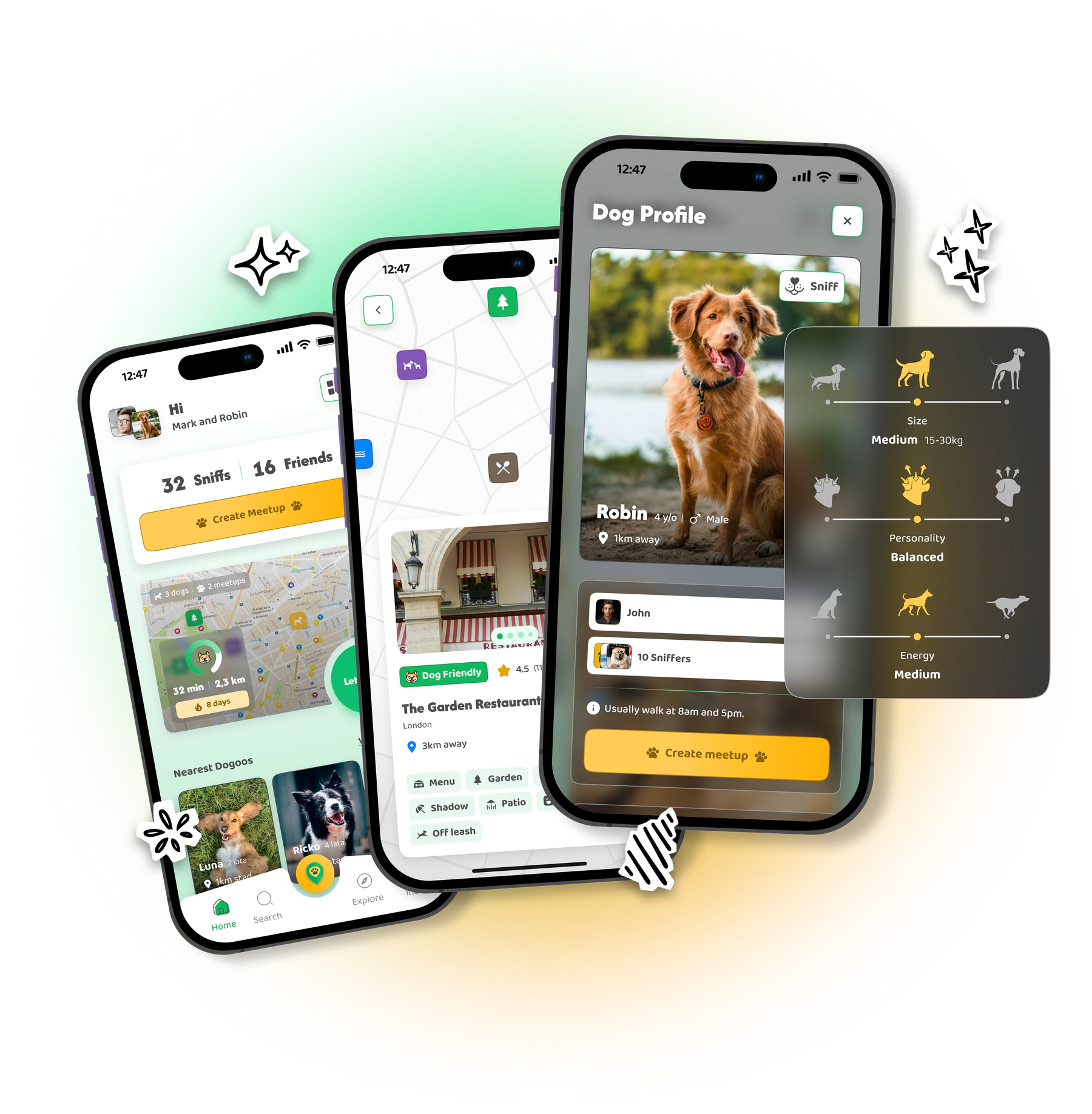
A dog that walks on a loose lead is a pleasure to be with. A calm walk, no pulling, no tension, is the foundation of a good relationship. While you're building that, choose routes with fewer distractions. The DOGOUT map will show you quiet parks and off-lead areas nearby - find a spot where you can both practise together, then push a little further each time.
Frequently asked questions
- Why does my dog pull on the lead?
- Pulling works for them. When a dog surges forward, it reaches the interesting smell or other dog faster, and you follow - unknowingly rewarding the pull every single walk. Fixing it means reversing that logic: pulling stops movement, a slack lead continues it.
- How long does loose-leash walking training take?
- You'll see early improvement within a few sessions. Solid loose-leash walking in most situations, with various distractions, typically takes several weeks to a few months of consistent practice depending on the dog's age and how established the pulling habit is.
- Is a harness better than a collar for training?
- A front-clip harness or a standard harness is safer for a dog's neck than a flat collar when the dog pulls hard. It doesn't replace training, but it reduces injury risk while you work. Avoid prong collars and choke chains - they cause pain and teach nothing lasting.
- What do I do when my dog pulls towards another dog?
- That's one of the hardest scenarios. Build reliable loose-leash walking in calm environments first. When you spot a dog at distance, change direction or increase the gap, and reward your dog for focusing on you. Gradually work closer to the distraction over many sessions.
- Can an older dog learn to walk on a loose lead?
- Yes, though it may take longer because the pulling habit is more ingrained. Older dogs do still learn - the keys are consistency and high-value rewards.
- Does a retractable (flexi) lead make training harder?
- Yes, significantly. A retractable lead automatically tightens as the dog moves ahead - so pulling is never clearly linked to a consequence. Use a fixed-length lead (1.5-2 m) for all training sessions.