Puppy Socialization - a Complete Action Plan
Puppy socialization is the process of introducing your puppy to the people, dogs, sounds, and places it will meet as an adult - ideally between weeks 3 and 16, though the work really continues through the first year. The key is small doses of new experiences, positive associations (a treat, a calm voice), and never flooding a puppy with too much at once. A well-socialized dog is far less likely to grow up fearful of strangers, other dogs, loud noises, or new environments.
Puppy socialization determines what kind of dog you'll have in a year, in five years, in ten. It isn't a single trip to the dog park with a few other dogs - it's a deliberate process of introducing your puppy to the world, starting in its first weeks of life, that keeps paying off for the rest of its life. The good news: you don't need to be a behaviorist to do it well. You need a plan, patience, and attention to what your puppy is actually experiencing.
What puppy socialization actually means
Socialization is the process by which a puppy learns that people, dogs, sounds, surfaces, and situations it encounters are neutral or pleasant - not threats. A young dog's brain is unusually flexible during this window: whatever it experiences as normal tends to stay filed as normal for years. Whatever it never experiences at all can later read as scary simply because it's unfamiliar.
One distinction matters here: socialization isn't "let every dog you meet say hi." It's building a puppy's underlying sense that the world is, on the whole, safe - even when something new shows up.
When does the critical period start and end?
The critical socialization period runs roughly from week 3 to week 16 of a puppy's life. During this stretch, new experiences are filed as neutral most easily. After that window, a puppy's brain grows more cautious around the unfamiliar - which doesn't mean socialization stops, just that it needs more repetition and patience going forward.
| Stage | Puppy's age | What to do |
|---|---|---|
| Breeder-stage socialization | Weeks 3-8 | Contact with people, littermates, gentle handling of paws and muzzle |
| Critical period at home | Weeks 8-16 | Safe, controlled exposure - sounds, surfaces, people, friends' dogs |
| Consolidation | Months 4-12 | Regular walks, meetups with other dogs, new places |
| Maintenance | For life | New routes, new people, varied walks |
How to socialize a puppy step by step
- Start indoors. Before the first walk, get the puppy used to household sounds - the vacuum, the doorbell, the TV - from a safe distance, rewarding calm behavior.
- Introduce one new thing at a time. A different surface underfoot, a new sound, meeting one calm person - one new element a day works better than a flood of stimulation.
- Build positive associations. A treat, a calm voice, and the option to retreat if the puppy hesitates are the basics. Never force contact a puppy is trying to avoid.
- Read the body language. Yawning, lip licking, tail tucking, or trying to hide behind your legs all signal overload - a good reason to learn a bit more about canine body language so you catch these cues earlier.
- Socialize with other dogs gradually. Start with calm, familiar, adult dogs that handle puppies well before moving on to bigger groups on socialization walks.
- Don't skip alone time. Short, gradually lengthened stretches alone teach a puppy that being briefly by itself is fine - which helps prevent separation anxiety later on.
The most common puppy socialization mistakes
- Cramming in too much at once. A family gathering, a new dog, a loud street, and a vet visit on the same day is a recipe for overload, not socialization.
- Forcing contact. Lifting a puppy up to a stranger who wants to "say hi" while the puppy is pulling back teaches it that it has no control over the situation - which builds anxiety, not confidence.
- Waiting for full vaccination before doing anything. The world can be introduced safely earlier - in your arms, from a balcony, in a friend's yard with a fully vaccinated dog.
- Socializing with dogs only, skipping people and places. A puppy that only knows other dogs can still struggle to accept new people, sounds, or surfaces.
- Losing consistency after week 16. Socialization isn't a sprint to a deadline - the work should continue through the puppy's entire first year.
Puppy socialization happens on real walks
The best socialization comes from real, regular walks - at different times of day, on different routes, around different people and dogs. If you're looking for a concrete plan for the first weeks with a puppy at home and outside, see our guide on puppy walks and, for finding new routes together, our pillar guide on where to go with your dog.
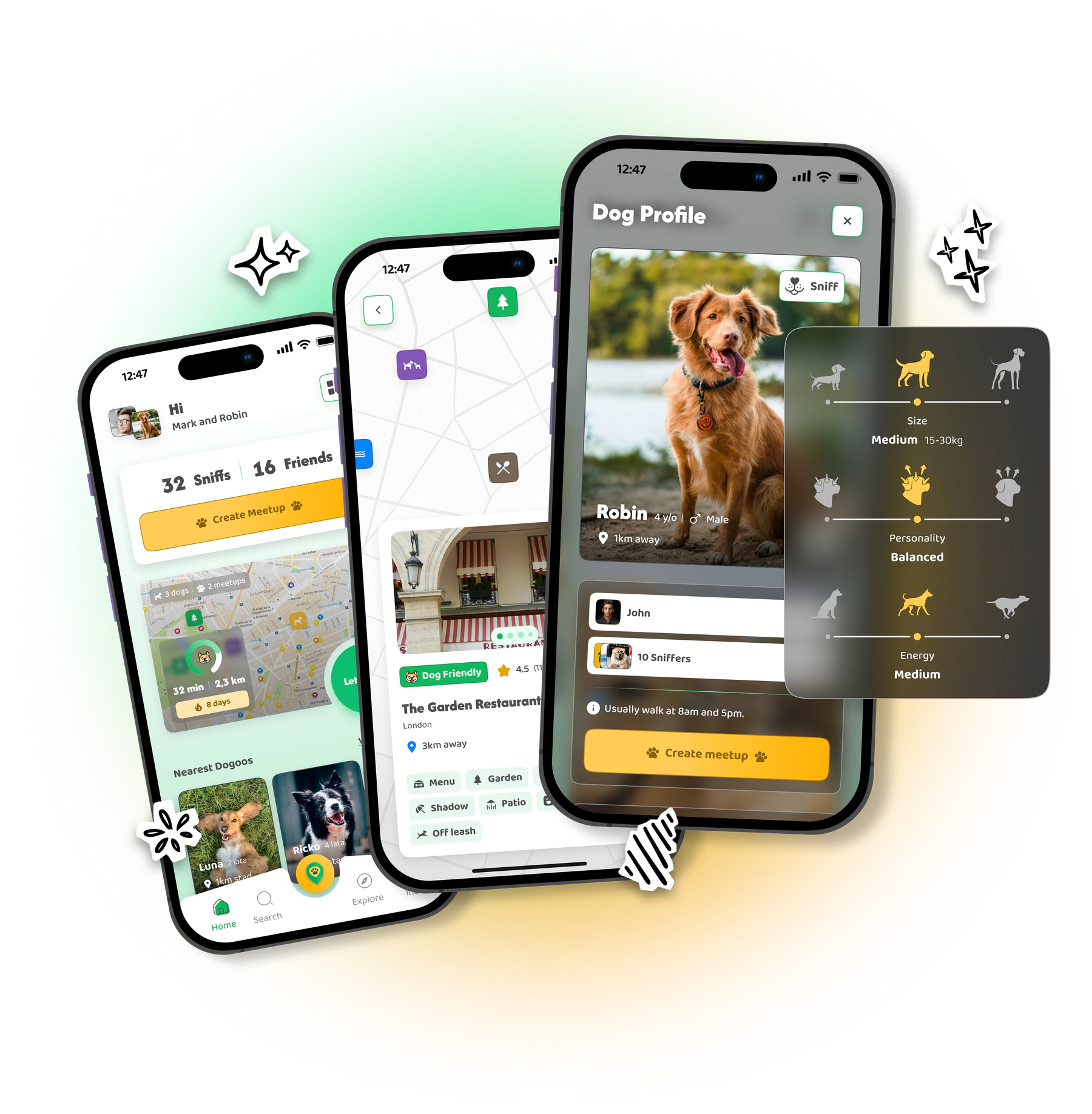
This is where the DOGOUT map helps. Instead of guessing where a calm spot for a first meeting with another dog might be nearby, check the DOGOUT community map - see who's walking close by, which places other owners have already marked, and where to set up a short, controlled meetup instead of a random face-off on the sidewalk. Good socialization also means good company, and that's exactly what a real local pack of dog owners gives you - not another feed to scroll through.
If your puppy keeps reacting with fear toward other dogs or strangers despite your efforts, don't wait to bring in a professional - you can also find trainers and behaviorists with the right experience among DOGOUT users near you.
Frequently asked questions
- When should you start socializing a puppy?
- As early as week 3, while the puppy is still with the breeder, and then continuously once it comes home - even before the vaccination schedule is complete. Weeks 3 through 16 make up the so-called critical period, when a puppy's brain most readily files new experiences as neutral or positive. Socialization still matters after 16 weeks, but it takes more patience and repetition.
- Can an unvaccinated puppy go on socialization walks?
- Yes, with care. Instead of a busy sidewalk full of unfamiliar dogs, choose controlled, low-risk situations - carrying the puppy in public places, watching the world from a balcony or car window, meeting healthy, fully vaccinated dogs belonging to friends. Talk to your vet about a walk plan that fits your puppy's vaccination status.
- How many new experiences a day is right for a puppy?
- Fewer, calmer experiences beat a marathon of stimulation. One or two short, positively-ended new experiences a day work better than cramming everything into one outing. Watch your puppy - yawning, lip licking, tucking its tail, or trying to back away all signal it's had enough and needs a break.
- What is the puppy socialization checklist people mention?
- It's an informal framework covering roughly a dozen categories of stimuli: people (different ages, appearances, clothing), other dogs, household pets, sounds (traffic, vacuum cleaners, fireworks), surfaces (grass, metal, glass, stairs), vehicles, handling (paws, muzzle, ears), being alone, travel, urban and rural environments, objects (umbrellas, strollers, bikes), and vet-clinic-type situations. The exact list matters less than the variety - it's a guide, not a rulebook.
- Can you make up for missed socialization in an adult dog?
- Partially, yes - though progress is slower and takes more work than during a puppy's critical period. An adult dog that never met a certain stimulus can often learn to tolerate it through gradual, controlled exposure paired with positive reinforcement - ideally with a professional trainer or behaviorist involved if fear or aggression is already showing.
- What are the signs of poor socialization in a dog?
- Common signs include fear of strangers or unfamiliar dogs, barking or growling at new stimuli, avoiding new places, panicking at loud noises, and struggling with travel or vet visits. Left unaddressed, these patterns can stick around for a dog's whole life.