Rottweiler Temperament - Character and Who the Breed Suits
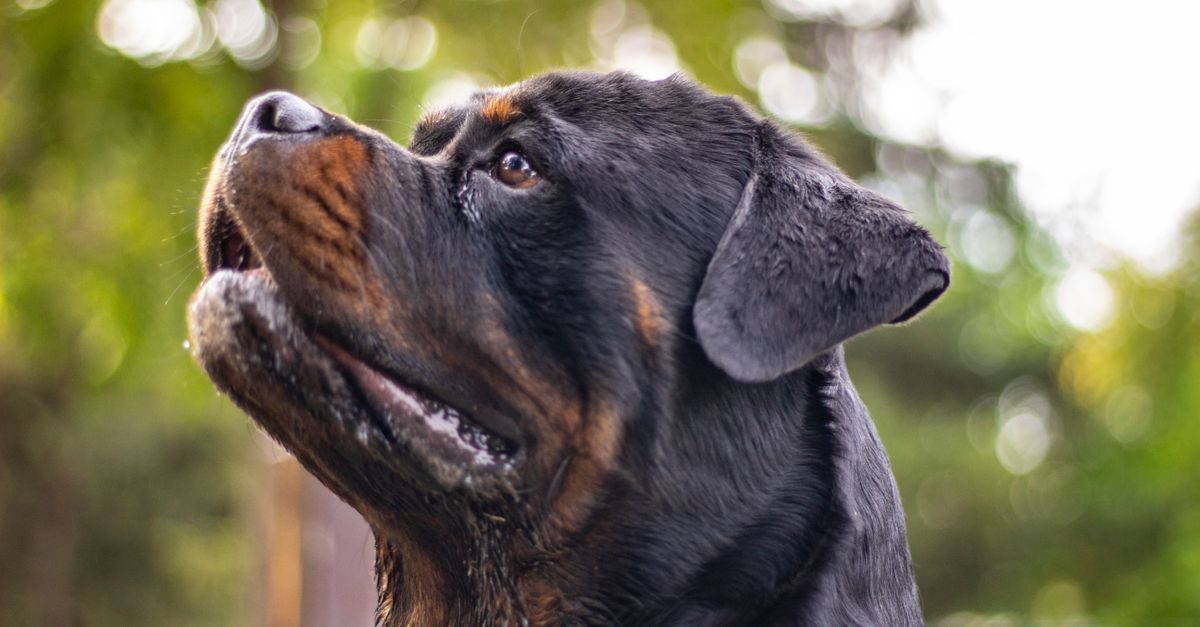
The Rottweiler is a confident, calm, deeply loyal dog bred for work and guarding. Contrary to the stereotype, a well-socialised Rottweiler is stable and gentle with its family, but its strength and natural watchfulness call for an experienced, consistent handler. It needs plenty of exercise plus proper mental work, and thorough early socialisation. It is not the breed for someone wanting a low-maintenance dog or a first dog without trainer support.
Few breeds stir up as much emotion as the Rottweiler. To some it is the menacing guard dog of headlines; to others it is the gentle giant who sleeps with its head on its owner's lap. The truth is more concrete and less sensational: the Rottweiler is a working dog, clever and deeply bonded to its household, who in the right hands becomes one of the most stable dogs you will meet. But those right hands are the whole point.
Where the Rottweiler comes from and what it tells us
The Rottweiler takes its name from the German town of Rottweil, where its ancestors drove cattle and guarded butchers' property. The breed descends from mastiff-type dogs brought by the Roman legions. For centuries the Rottweiler did heavy, responsible work: herding stock, pulling carts, and guarding the money merchants carried to market.
That heritage explains today's temperament. The Rottweiler is hardy, self-assured, and oriented towards working with people. It has a strong guarding instinct and a natural reserve towards strangers - not because it is hostile, but because for generations its job was to assess a situation. Once you understand you are dealing with a thinking, protective dog rather than an attack machine, all the work with it starts to make sense.
Key traits of the Rottweiler temperament
Confidence is the foundation of the breed. A Rottweiler rarely panics and rarely flees. In a new situation it is more likely to stop and assess than to react instantly. That stability is a huge asset, provided it goes hand in hand with good socialisation.
Attachment to its owner is surprisingly strong. The Rottweiler is no loner. It wants to be close to its household, to take part in daily life, and to work for a handler it respects. Isolated in a yard, without contact or a job to do, it becomes frustrated.
Watchfulness is hard-wired. A Rottweiler will spot a stranger at the gate and let you know. That is a plus for someone who values a guard dog and a challenge for someone who did not plan on it - without boundaries, that watchfulness can tip into over-reactivity.
Intelligence and willingness to work mean the Rottweiler learns fast. The same trait means it will fill boredom on its own terms if you do not give it a task.
| Trait | Description |
|---|---|
| Confidence | Very high - rarely fearful or panicky |
| Attachment to owner | Very strong - copes poorly with isolation |
| Watchfulness / guarding instinct | High - natural reserve towards strangers |
| Energy level | Medium to high - needs exercise and tasks |
| Trainability | High, but demands consistency and experience |
| Friendliness towards strange dogs | Variable - depends heavily on socialisation |
| Tolerance of being alone | Low to medium - a companion to its household |
How much exercise and mental work does a Rottweiler need?
The Rottweiler is a working dog, so a quick toilet walk will not satisfy it. An adult needs at least one to two hours of activity a day, but mental engagement matters just as much as physical movement.
- Puppy (up to six months): short, frequent walks and plenty of calm socialisation. Avoid overloading the joints - no long running, jumping from heights, or hard play on hard surfaces.
- Young Rottweiler (six to eighteen months): gradually longer walks, the start of obedience and scent work. This is the age when the dog tests boundaries and most needs clear, consistent rules.
- Adult Rottweiler (two years and up): a mix of exercise and work - tracking, retrieving, obedience, dogtrekking, safe pulling. This breed loves having a job.
A bored, under-exercised Rottweiler is not acting "out of spite" - it is simply looking for an outlet for its energy and mind. Mental work tires this dog more than running alone.
Are Rottweilers aggressive? Clearing up the myth
This question comes up most often, so let us be plain: Rottweilers are not born aggressive. They are born watchful, strong, and confident. The breed's reputation largely stems from the fact that its strength and guarding instinct, in the wrong hands - unsocialised, kept away from the family, ruled by fear or force - produce a result that can be dangerous.
A well-handled Rottweiler is composed. It ignores strangers on a walk, calmly passes other dogs, and at home can be openly affectionate with its household. The key is three things: early, rich socialisation; consistent, cooperation-based upbringing (not dominance); and an owner who understands the dog and does not leave it with decisions beyond its capacity. If you want to understand how to build calmness in a dog from the ground up, start with our guide to dog socialization.
Who is the Rottweiler for, and who is it not for?
This needs to be said honestly - it is not a breed for everyone.
A Rottweiler suits you if:
- You have experience with dogs, or are ready to work with a good trainer from the start.
- You value a dog that wants to cooperate and be close to the family.
- You have time for daily exercise and regular mental work.
- You are consistent and calm - a Rottweiler reads its handler's emotions.
A Rottweiler may be the wrong choice if:
- You are looking for a first dog and have no trainer support.
- You want a low-maintenance dog that will look after itself.
- You have no time for socialisation and daily activity.
- You only want a "guard dog" kept on a chain - that is a road to problems.
Rottweiler health and lifespan
Rottweilers live on average eight to ten years - one of the prices you pay for a big dog. The breed is predisposed to several issues worth knowing about in advance:
- hip and elbow dysplasia - which is why weight control and sensible puppy exercise matter so much,
- heart problems (including aortic stenosis),
- a tendency towards certain cancers, including osteosarcoma,
- bloat (gastric torsion) - typical of large, deep-chested breeds.
Regular vet checks, a responsible breeder who screens parents for joints and heart, and keeping the dog fit rather than overweight all genuinely affect how long and how well a Rottweiler lives. For more on differences between breeds, see how long do dogs live.
Practical takeaway
The Rottweiler gives enormously - loyalty, calm, a sense of security - but it needs a switched-on handler who is not afraid of work and consistency. It is a breed for active people who value close contact with their dog and are ready to invest time in socialisation from the first weeks. If you are looking for places where your Rottweiler can calmly practise meeting other dogs and people at a manageable pace, check the DogOut map for spots recommended by other owners and time your outing for a quieter moment. A well-handled Rottweiler repays you with a loyalty few breeds can match.
Frequently asked questions
- Are Rottweilers aggressive?
- Rottweilers are not aggressive by nature - they are watchful and protective. A well-socialised, well-handled Rottweiler calmly ignores strangers and only protects its family in a genuine situation. Problems arise from poor socialisation, boredom, or a handler who cannot manage the situation. This is a breed that needs knowledge, not fear.
- Is a Rottweiler good for a family with children?
- Yes, a well-raised Rottweiler can be a patient, loyal family dog. Its size and strength mean contact with small children always needs supervision - not because of bad intent, but sheer power. Teach children to respect the dog, and never leave them alone together.
- How much exercise does a Rottweiler need?
- An adult Rottweiler needs at least one to two hours of activity a day, split across several outings, plus mental work. A lead walk alone is not enough - tracking, obedience, retrieving, and shared training all work well. A bored Rottweiler can become destructive.
- Is a Rottweiler a good breed for a first-time owner?
- Usually not as a first dog without support. Rottweilers are intelligent and eager to work, but their strength, watchfulness, and self-assurance demand consistency and experience. A beginner can manage one, but only with a good trainer from the first weeks.
- How long do Rottweilers live?
- Rottweilers live on average eight to ten years, shorter than many smaller breeds. They are prone to joint dysplasia, heart problems, and certain cancers. Weight control, sensible exercise, and regular vet checks genuinely affect the length and quality of their lives.
- Can a Rottweiler live in a flat?
- It can, if the owner provides enough exercise and stimulation. Flat size matters less than daily activity and a calm dog. A Rottweiler living in a flat must be well socialised to noise, the lift, and neighbours.