Velcro Dog - Why Your Dog Follows You Everywhere
Following you step for step is natural dog behaviour - dogs are social animals and choose the company of their group. In most cases it's simple attachment and no cause for concern. The problem appears when a dog can't be left alone even for a moment, panics behind closed doors, or suffers when you leave - that can point to separation anxiety. The key is teaching your dog that being alone is safe, without abruptly cutting off contact.
You head to the kitchen - the dog's behind you. You get up from the sofa - the dog's already on its feet. Even the bathroom comes with an escort. The behaviour even has a nickname: a "velcro dog". For most owners it's endearing, but it raises a question: is this normal, or a sign that something's off? Below we explain where following comes from, when it's healthy, and when it's worth a closer look.
Why does a dog follow its owner?
Dogs are deeply social animals. In the wild they stay with their group, and at home their group is you and the rest of the household. Following you is usually just an expression of attachment and a wish to stay close. Add to that the plain logic of daily life:
- you're the source of food, walks, play, and attention,
- your dog learns that where you are, something interesting happens,
- getting up and moving often signals a walk or a meal.
In other words, your dog follows you because it pays off and because it enjoys it. In most dogs this is entirely healthy behaviour.
When is it normal, and when is it a warning sign?
The line falls in one place: can your dog be alone without suffering?
| Situation | What it means |
|---|---|
| Dog follows you while you're home but settles alone calmly | Normal attachment, no cause for concern |
| Dog rests in another room and only occasionally checks in | A healthy, balanced bond |
| Dog panics when you close a door between you | Possible start of over-attachment |
| Dog howls, destroys, or toilets in your absence | A sign of separation anxiety - worth acting on |
| A previously independent dog suddenly shadows you | Possible medical cause - see a vet |
Following, on its own, isn't an illness. It only becomes a problem when a dog can't function without your physical presence.
Over-attachment vs separation anxiety
It's worth separating two things that often get confused. Over-attachment is when a dog wants to be with you constantly and copes poorly even with a closed door at home. Separation anxiety is a disorder in which your absence triggers genuine panic.
Signs of separation anxiety appear while you're away and include:
- prolonged howling and barking,
- destruction, especially around doors and windows,
- toileting despite a recent walk,
- drooling, panting, pacing from stress.
If you recognise these signs, read more in our guide to separation anxiety in dogs and what to do when a dog is destructive home alone. It's also worth knowing the general stress signals in dogs, since over-attachment often goes hand in hand with them.
How to teach your dog to settle alone
The goal isn't to discourage your dog from company, but to teach it that being alone is safe and predictable. Gradual, calm confidence-building works:
- Practise short separations at home - step into another room and come back before your dog gets upset. Extend the time gradually.
- Don't make a drama of comings and goings - no long goodbyes or ecstatic reunions. Leaving and returning should be boring.
- Tire your dog out before the separation - a walk, scent game, or training session before you leave makes it more likely to rest alone.
- Leave something to chew - a snuffle mat, a stuffed toy, or a chew helps your dog associate being alone with something pleasant.
- Build a safe zone - a comfortable, fixed spot your dog likes to rest in, including when you're nearby.
- Don't punish attachment - pushing your dog away or forcibly ignoring it increases anxiety rather than easing it.
With strong separation anxiety, home practice alone may not be enough - then you need a plan built with a certified behaviourist.
Does breed and background play a role?
Some dogs are simply wired to stay close. Breeds developed for constant partnership with people - companion breeds, herding dogs, and retrievers bred to work at their handler's side - often keep a closer eye on their owner than, say, an independent primitive or guardian breed. That's a tendency, not a life sentence: a well-socialised dog of any breed can learn to be comfortably independent.
Background matters just as much as breed. Dogs adopted from shelters, those rehomed several times, or puppies that never learned to be alone during the socialisation window can shadow their new owner intensely at first. In most cases this settles as the dog learns the new home is predictable and that you always come back. Rushing the process, or coddling the anxiety, tends to make it stickier rather than shorter.
The pattern you build in the first weeks tends to stay. If a new dog is never left alone at all, it never gets the chance to learn that solitude is safe - so a little structured alone time from the start, in small doses, is a favour to your dog, not a punishment.
When to consult a specialist
It's worth seeing a vet when attachment changes suddenly - a previously independent dog starts shadowing you, seems restless, or seeks closeness more than usual. In older dogs such a change can signal pain, failing sight or hearing, or dementia, so medical causes are ruled out first.
See a behaviourist when your dog can't be alone without panic, destroys or howls in your absence, and home practice brings no improvement. The earlier you start, the easier the pattern is to break.
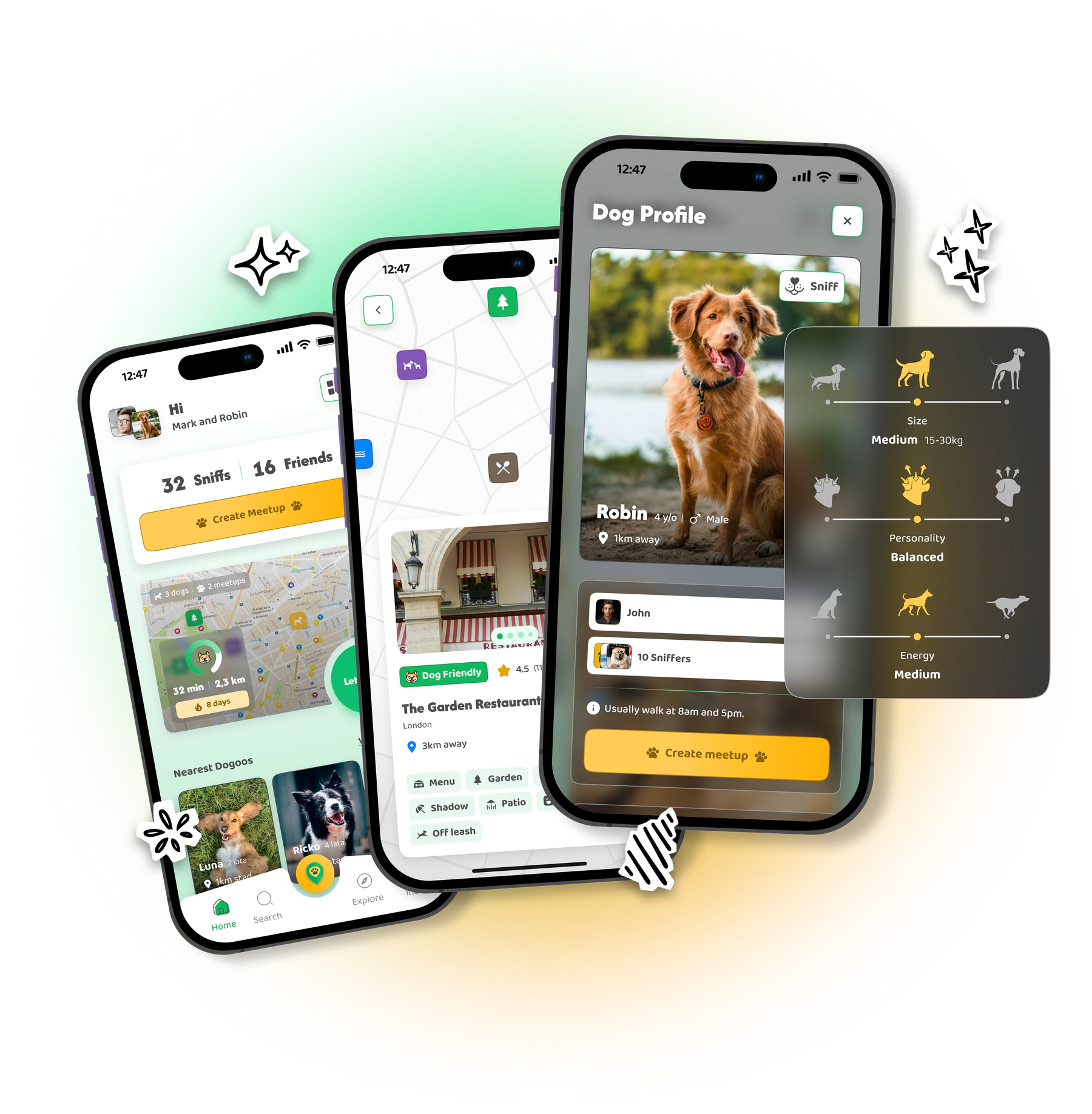
A dog that follows you step for step is usually just proof that you're the most important person in its world. Still, it's worth making sure it can also settle alone calmly - that's an investment in its wellbeing, not a rejection. A well-balanced dog happily explores the world beyond your shadow, too: on the DogOut app you can find where to meet other dogs and owners nearby, who make a walk far more interesting than simply sticking to your leg.
Frequently asked questions
- Why does my dog follow me everywhere?
- Dogs are social animals that naturally choose the company of their group - following their owner is usually just plain attachment. Daily routine reinforces it too: you're the source of food, walks, and attention. In most dogs this is healthy behaviour and nothing to worry about.
- Is a velcro dog the same as separation anxiety?
- Not always. Following you around while you're home is normal. Separation anxiety is different - it's when a dog panics in your absence, howling, destroying things, toileting, or drooling from stress. If your dog settles calmly when left alone, simply shadowing you isn't a problem.
- How do I teach my dog to be alone?
- Start with very short separations at home - step into another room and come back before your dog gets stressed, gradually extending the time. Don't make a drama of comings and goings, tire your dog out before the separation, and leave something to chew. Strong separation anxiety needs a behaviourist's help.
- Should I let my dog follow me to the bathroom?
- That's your call - for many owners it's charming and harmless. It's worth making sure, though, that your dog can also settle in place calmly when asked. The goal is that your dog can be alone, not a ban on it keeping you company day to day.
- Is a sudden change in my dog's clinginess a concern?
- Yes. If a previously independent dog suddenly starts shadowing you, it can signal pain, illness, failing sight or hearing, or anxiety. Sudden behaviour changes in an older dog are worth checking with a vet to rule out a medical cause.
- Does breed affect how much a dog follows its owner?
- Partly. Breeds developed for close work with people - companion, herding, or retrieving dogs - can be more focused on their owner. It's a tendency, not a rule, though: attachment is also shaped by upbringing, experiences, and daily routine.